
Collision Repair for Aluminum-Body Vehicles: What's Different?
Little Rock, United States - January 1, 2026 / Bale Collision Center (Chenal) /
Little Rock, AR - Bale Collision Center (Chenal) offers auto collision repair for aluminum-body vehicles in Little Rock. As more trucks and SUVs feature aluminum construction for enhanced performance, proper repair techniques have become essential to protect structural durability and maintain long-term vehicle safety.

The Rise of Aluminum in Modern Vehicle Manufacturing
Automotive manufacturers have adopted aluminum for body panels and structural components due to its weight-saving benefits and crash energy management capabilities. Popular trucks and SUVs, such as the Ford F-150, feature extensive aluminum construction. However, aluminum behaves very differently from steel during repairs, requiring precise techniques, unique materials, and controlled environments.
Key Differences Between Aluminum and Steel Repairs
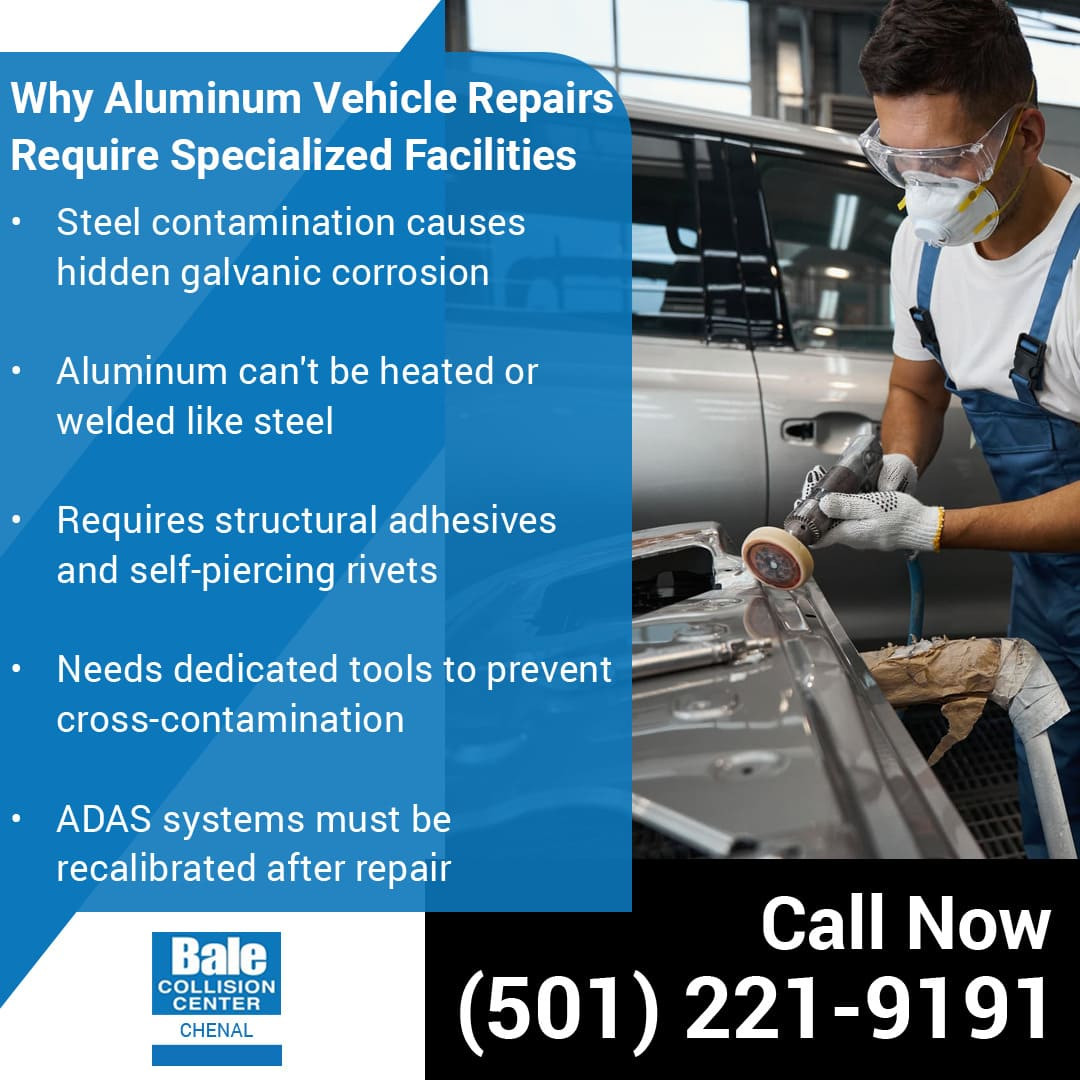
Unlike steel, aluminum does not respond well to traditional reshaping or welding. It hardens when bent and cannot be heated freely without weakening the material. Its high thermal conductivity causes heat to spread rapidly across panels, risking damage beyond the repair area. These properties demand tools and procedures specifically developed for aluminum vehicles.
Another critical distinction lies in joining methods. While steel panels are often spot-welded, aluminum components use structural adhesives, self-piercing rivets, and bonding techniques that must be replicated accurately. These methods help distribute crash energy and preserve structural alignment.
Corrosion Risks From Cross-Contamination
Steel contamination remains one of the most dangerous threats to aluminum repairs. When even microscopic steel particles contact aluminum, galvanic corrosion can begin. This chemical reaction weakens structural components beneath the surface, often progressing unnoticed until critical damage has occurred.
To prevent contamination, aluminum repairs must occur in fully separated environments with dedicated tools, vacuums, and ventilation. Shared workspaces or improperly cleaned tools create long-term risks that may not be visible for months after the collision repair.
Structural Integrity Depends on Precise Aluminum Repairs
Improper aluminum repair can weaken key vehicle safety zones, including areas where seat belts and airbags attach. Panels joined with incorrect rivets or adhesives may not absorb crash energy properly. In a future collision, these failures may lead to panel separation or compromised cabin protection.
Welding aluminum with incorrect filler wire or excessive heat may not be obvious to the untrained eye, but it undermines the strength of the joint and surrounding metal. These hidden weaknesses present major risks that only become apparent under crash conditions.
Dedicated Equipment and Facilities at Bale Collision Center
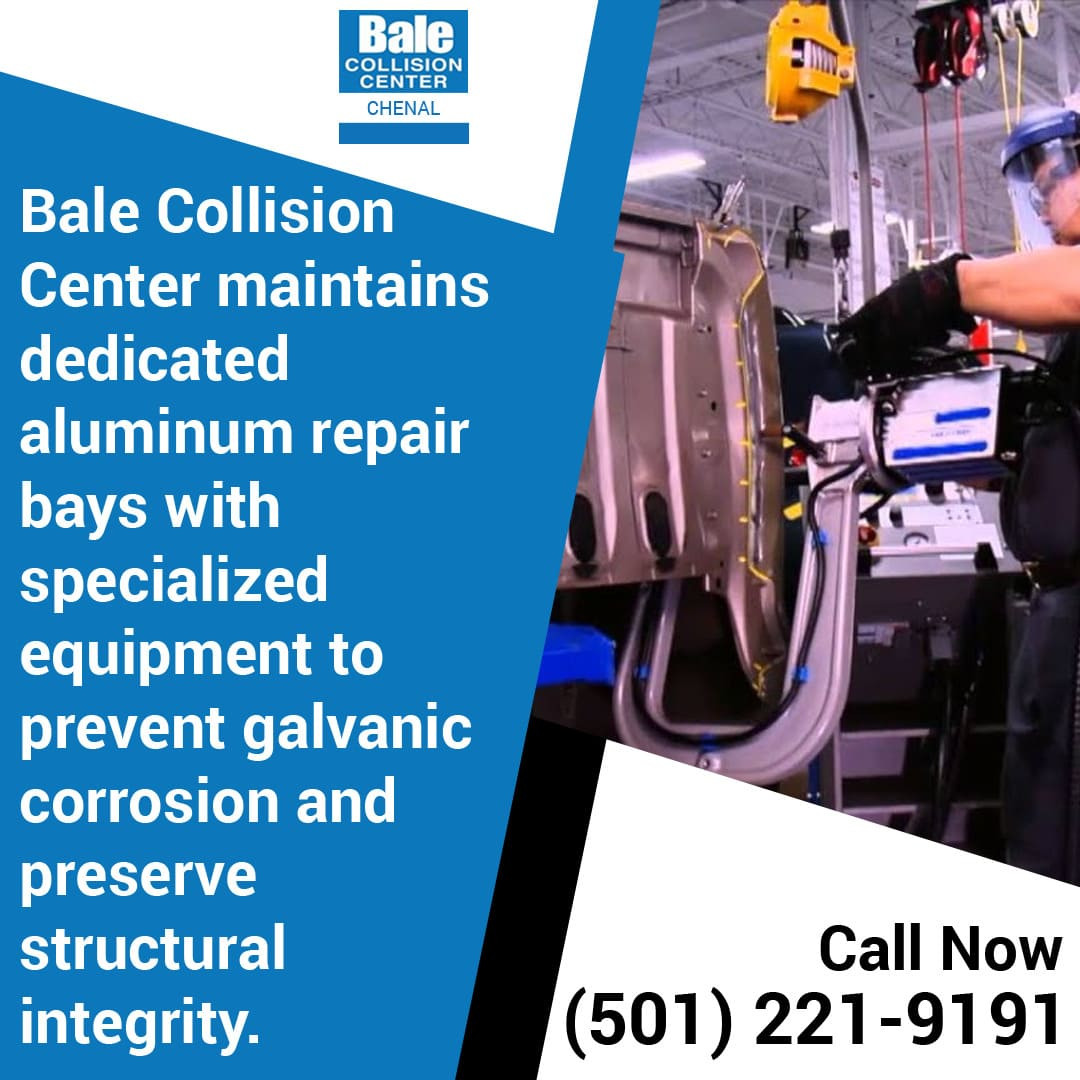
Bale Collision Center has invested in isolated aluminum repair bays, aluminum-specific welding equipment, and explosion-proof dust collection systems. Every hand tool, measuring device, and bench used for aluminum repairs at the collision center is kept separate from steel-use tools to prevent cross-contamination.
This physical separation is required to maintain the safety and value of aluminum-bodied vehicles. Work performed in mixed-use areas, even by experienced technicians, can introduce harmful steel residue into sensitive structural regions.
Certifications That Support Advanced Repair Capabilities
The collision repair industry recognizes I-CAR as the standard for professional training. Bale Collision Center delivers certified collision repair through its I-CAR Gold Class facility designation and a team that includes multiple I-CAR Platinum-certified technicians. These certifications demonstrate expertise in aluminum repair methods, corrosion control, joining systems, and electronic components. Ongoing education keeps technicians aligned with updated repair protocols and new vehicle materials.
Following Manufacturer Procedures to Protect Vehicle Value
Aluminum vehicles must be repaired using OEM-approved procedures. Bale Collision Center follows these specifications for each brand and model, accessing the latest repair manuals and materials databases. Each repair includes full documentation of techniques, materials, and verification steps.
Panel alignment, bonding methods, and structural reinforcement follow factory specifications to maintain the vehicle’s crash protection and resale value. Every step, from initial assessment through post-repair diagnostics, is performed using equipment designed for aluminum vehicles.
Final System Checks and Post-Repair Validation
Aluminum-bodied vehicles often include ADAS (Advanced Driver Assistance Systems) and electronic sensors that rely on structural accuracy. Bale Collision Center conducts full system scans before and after repair work to validate that safety systems, sensors, and onboard diagnostics function properly.
These final checks confirm that the vehicle is structurally sound, electronically calibrated, and road-ready. This step is essential for restoring both the mechanical and electronic integrity of modern vehicles after collision repairs.

Trusted Collision Repair for Aluminum Vehicles in Little Rock
Bale Collision Center provides full aluminum repair services as part of its car collision repair in Chenal, Little Rock, AR. With 72 years of experience and advanced certifications, the center continues to support drivers whose vehicles rely on modern aluminum construction.
If your vehicle includes aluminum body panels or structural components, choose a facility equipped to handle the material correctly. Contact Bale Collision Center at (501) 221-9191 or email bccwlr@baleautomotive.com to schedule a repair assessment. Trust your vehicle to a collision center built to meet the requirements of today’s vehicles.
Contact Information:
Bale Collision Center (Chenal)
13101 Chenal Parkway
Little Rock, AR 72211
United States
Jason Spiller
(501) 221-9191
https://balecollision.com/
Original Source: https://balecollision.com/collision-repair/collision-repair-for-aluminum-body-vehicles-whats-different/