New York, NY, Feb. 06, 2026 (GLOBE NEWSWIRE) -- Disclaimer: This article is for informational purposes only. It is not medical advice. Weight management concerns should be evaluated by a qualified healthcare professional. This content does not diagnose, treat, cure, or prevent any disease. If you purchase through links in this article, a commission may be earned at no additional cost to you.
What This Article Covers and Why It Was Published
This release is an informational overview of publicly available disclosures for CitrusBurn and broader consumer research behavior within the weight management supplement options category. Nothing in this content should be interpreted as medical advice, a product endorsement, or a performance claim.
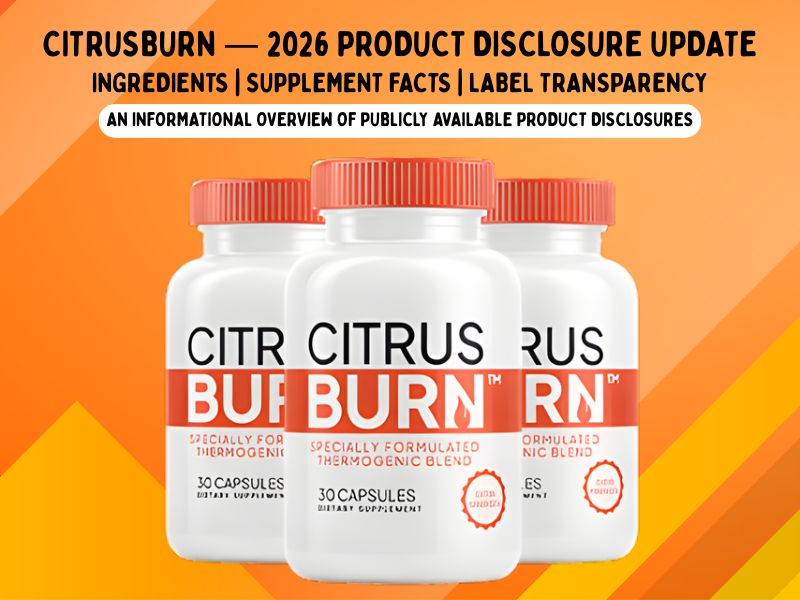
As consumer interest in weight management supplement options continues to grow heading into 2026, updated product disclosures for CitrusBurn have recently become publicly available. With more people researching what's out there, detailed product information is now accessible for anyone trying to better understand their supplement options.
This article provides informational context about the weight management supplement category and summarizes what Citrus Burn has disclosed about its product. Readers seeking primary-source detail can view the current CitrusBurn offer (official Citrus Burn page) to review the company's complete product disclosures directly. This article does not assess product effectiveness or outcomes and focuses solely on publicly available disclosures.
Why Consumers Are Researching Weight Management Supplement Options
If you've spent any time searching for weight management supplements online lately, you already know the category is crowded. Interest appears to be rising as more consumers report researching what products are available and what factors might be worth considering before making a purchase decision. For many adults, particularly those over the age of 35, questions about metabolic changes and body composition tend to shift from casual curiosity to active research — and the amount of information available can feel overwhelming.
The supplement category itself is broad, encompassing capsules, powders, liquids, and other formats that vary widely in ingredient composition, labeling transparency, and pricing structure. That range can make comparison difficult without access to standardized product disclosures, which is part of why articles like this one exist — to organize what's actually been disclosed in one place.
Readers encountering marketing terms such as the "orange peel hack" may find additional context in a prior informational release examining 'orange peel hack' claims and how this language is commonly used in online advertising and consumer search behavior. This article does not describe a method, protocol, or technique and focuses exclusively on product disclosures and consumer research context.
Public health guidance commonly encourages individuals to consult with a qualified healthcare professional before beginning any new supplement regimen, particularly when managing existing health conditions or taking prescription medications. This recommendation is especially relevant within the weight management category, where individual responses to dietary supplements can vary based on a wide range of personal health factors.
What Weight Management Supplements Typically Refer To
The phrase "weight management supplement" generally refers to dietary supplement products formulated with ingredients that are positioned within the broader category of metabolic and body composition support. These products are classified as dietary supplements under federal guidelines and are not evaluated or approved as treatments for any specific medical condition.
Within this category, you may encounter products containing botanical extracts, amino acids, vitamins, minerals, or proprietary blends. Formulations vary significantly between brands, and the level of ingredient disclosure provided also differs. Some companies publish full Supplement Facts panels with individual ingredient amounts, while others group ingredients into proprietary blends that do not disclose individual quantities.
Understanding these distinctions can help when evaluating what information is and is not available before making a purchasing decision. This overview does not recommend, rank, or compare specific products and is limited to publicly available category context.
What Consumers Often Consider When Researching This Category
When evaluating weight management supplement options, many people look beyond marketing language and focus on several non-outcome factors that can help inform their decision. These considerations typically include ingredient transparency, manufacturing disclosures, refund policy terms, and whether the company provides accessible customer service contact information.
Label literacy is another factor that has gained attention in recent years. Consumers who understand the difference between proprietary blends and individually disclosed ingredient amounts are often better positioned to compare products based on what is actually disclosed rather than what is marketed. The presence or absence of third-party testing, allergen disclosures, and manufacturing location information can also play a role in how people evaluate their options.
None of these considerations replace professional medical guidance, but they represent the types of practical, non-performance questions that many people tend to ask when navigating a crowded supplement category.
Ingredient Transparency in the Weight Management Supplement Category
People researching supplements often evaluate not only ingredient lists, but also what information is disclosed, what is grouped into proprietary blends, and where limitations in public data exist. Ingredient transparency is a factor many consumers consider when researching supplements. Companies vary in how much detail they provide about formulation, sourcing, and manufacturing processes. Some brands publish complete Supplement Facts panels with individual ingredient amounts, while others use proprietary blends that group ingredients together.
According to publicly available company disclosures, CitrusBurn lists Chromium (as Chromium Picolinate) at 100 mcg per serving alongside a proprietary blend totaling 510 mg. That blend includes Green Tea Leaf Extract, Apple Cider Vinegar, Berberine HCL, Ginger Root, Cinnamon Bark Extract, Bitter Orange Fruit Extract, Cayenne Fruit, Banaba Leaf Extract, Korean Ginseng Aerial Extract, and Resveratrol. Readers interested in the complete CitrusBurn Supplement Facts panel can find full details on the company's official product page. This overview is informational only and does not evaluate product outcomes or make performance claims.
Research referenced in this section relates to individual ingredients under specific study conditions and does not establish outcomes for CitrusBurn as a finished product. Because CitrusBurn uses a proprietary blend, individual ingredient amounts are not disclosed, which limits direct comparison to published research.
Understanding Proprietary Blends vs. Full Disclosure Labels
One distinction that frequently comes up in consumer supplement research is the difference between proprietary blend labeling and full disclosure labeling. In a proprietary blend, a manufacturer lists the ingredients contained in the blend and provides a total combined weight but does not disclose the individual amount of each ingredient. In a full disclosure label, each ingredient is listed with its specific amount per serving.
Both labeling approaches are permitted under current dietary supplement regulations. However, anyone who prefers to know the exact amount of each ingredient in a product may find full disclosure labels more useful for comparison purposes. Neither approach is inherently superior from a regulatory standpoint, but label format is a factor that some consumers weigh when comparing products within this category.
CitrusBurn uses a proprietary blend format for the majority of its listed ingredients, which is consistent with many products in the weight management supplement category. The company does disclose Chromium individually at 100 mcg per serving (286% Daily Value).
What Citrus Burn Discloses About Its Product
According to publicly available disclosures, CitrusBurn is a dietary supplement sold in capsule format with a serving size of one capsule and 30 servings per container. The company's published materials reference a blend of ingredients commonly listed within the weight management supplement category.
The product is described as being manufactured in the United States in a facility that the company states is FDA-registered and follows current Good Manufacturing Practices (GMP). The company also states that the product is plant-based, soy-free, dairy-free, non-GMO, and free of synthetic stimulants.
CitrusBurn is distributed by Citrus Burn, based in Aurora, Colorado. The product is available for purchase through the company's official website, and orders are processed through ClickBank as the authorized retailer. Readers seeking to access the company's complete disclosures can visit the official CitrusBurn product page here for Supplement Facts, pricing, and policy information directly.
Refund Policies and Customer Support Disclosures
According to publicly available policy disclosures, Citrus Burn outlines a refund policy with a stated 180-day evaluation period. Readers are encouraged to review the current terms and procedures directly on the official policy page, as conditions and requirements may change.
The company lists the following customer service contact information in its published disclosures: email at support@citrusburn.com and phone support at 1-800-985-7325, described as available 24 hours a day. A physical mailing address in Aurora, Colorado is also provided for return-related correspondence.
How This Article Fits Within Broader Consumer Research
This release is designed to serve as one informational resource among many that consumers may consult when researching weight management supplement options. It does not replace professional medical advice, independent product testing, or direct consultation with a healthcare professional.
Consumers are encouraged to consult multiple sources — including the company's official product disclosures, independent third-party resources where available, and guidance from a qualified healthcare professional — before making any supplement-related decisions. Readers who want to access CitrusBurn's published disclosures directly can visit the official CitrusBurn product page here.
For additional information, contact Citrus Burn directly at support@citrusburn.com.

support@citrusburn.com