
A Complete Guide to Features, Pricing, and Services That Drive Modern Business Communication
Alpharetta, United States - January 9, 2026 / SIP.US /
Small businesses switching to SIP trunking can reduce communication costs by 20–60% while gaining access to enterprise-grade features.
The SMB segment is the fastest growing category in SIP adoption, with a projected 14% CAGR through 2032.
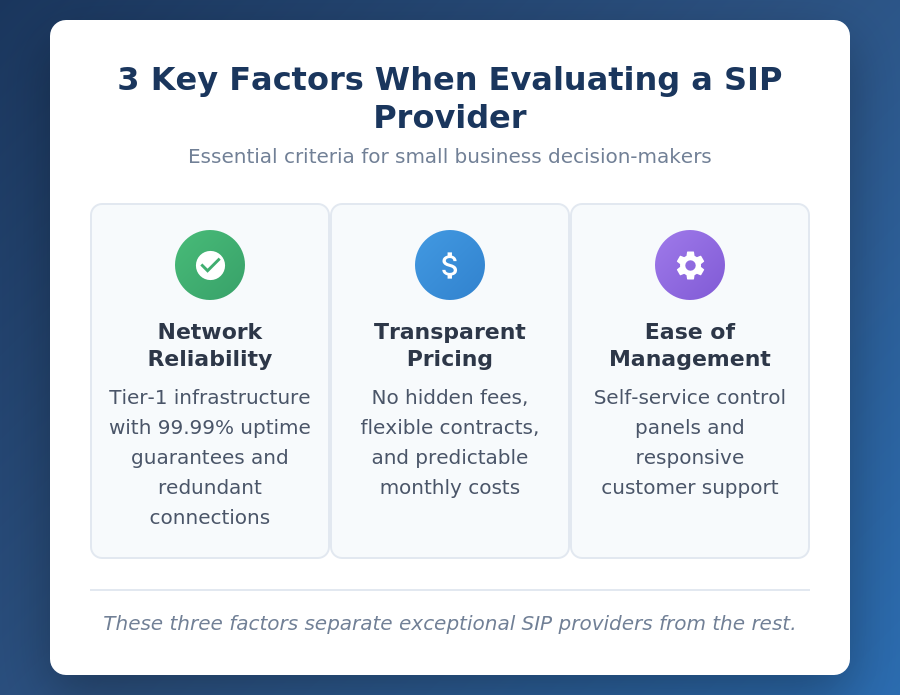
Transparent pricing, instant scalability, and network reliability are the three most critical factors when evaluating any SIP provider.
Modern SIP trunking services include unified communications that were previously exclusive to large enterprises.
Choosing the right provider now positions your business for long-term communication success as traditional phone systems become obsolete.
Small businesses face pressure to modernize their communication infrastructure without stretching limited budgets. Traditional phone systems drain resources through expensive hardware, inflexible contracts, and maintenance costs. Meanwhile, SIP trunking delivers professional-grade communications at a fraction of traditional costs.
The small and medium business segment is experiencing the fastest adoption growth in the SIP trunking market, with industry research projecting a 14.13% compound annual growth rate through 2032. This acceleration reflects a shift in how smaller organizations approach business communication solutions. Companies are discovering that the right SIP provider delivers cost savings while enhancing capabilities through features like video conferencing, business SMS, and seamless remote work support.
Understanding what separates exceptional SIP trunking services from mediocre alternatives helps small business owners make informed decisions. This guide examines the essential criteria for evaluating providers, comparing pricing structures and identifying features that align with specific operational needs.
What Makes a SIP Provider Right for Small Businesses?
The best SIP provider for one organization may not suit another. Small businesses have distinct requirements that differ from enterprise deployments. Understanding these specific needs creates a foundation for effective evaluation.
Network Reliability and Uptime Guarantees
Communication failures disrupt customer relationships and internal operations. Quality providers maintain Tier-1 network infrastructure with redundant connections across multiple geographic locations. This architecture eliminates single points of failure and ensures consistent call quality regardless of traffic volume.
Look for providers that publish specific uptime guarantees, ideally 99.99% or higher. These commitments should be backed by service-level agreements that provide accountability. Redundant routing means your calls automatically reroute through alternative pathways if primary connections experience issues, ensuring business continuity even during network disruptions.

Transparent and Predictable Pricing
Hidden fees are one of the most common frustrations with business VoIP provider relationships. The best providers offer clear pricing structures without setup fees, long-term contracts, or surprise charges. Small businesses benefit from pay-as-you-grow models that scale with actual usage rather than forcing capacity commitments.
Evaluate whether providers charge per channel, per minute, or offer unlimited calling plans. Each model suits different usage patterns. High-volume callers typically benefit from unlimited plans, while businesses with sporadic call activity may find metered pricing more economical.
Ease of Implementation and Management
Small businesses rarely have dedicated IT teams to manage complex communication systems. Providers offering instant provisioning and intuitive self-service control panels reduce friction. The ability to add phone numbers, adjust routing rules, and scale services without technical assistance empowers business owners to manage their own communications.
Look for comprehensive knowledge bases, responsive customer support, and onboarding assistance. These resources prove invaluable when questions arise during setup or daily operations.
What Features Should You Prioritize When Comparing SIP Trunking Services?
Modern SIP trunking services offer more than basic voice calling. Understanding which features deliver genuine value helps businesses avoid paying for unnecessary capabilities while ensuring essential functions are covered.
Essential Communication Capabilities
Every small business requires certain foundational features from its SIP provider. Direct inward dialing (DID) numbers allow customers to reach specific employees directly. E911 compliance ensures emergency services receive accurate location information when needed. Caller ID management enables businesses to present consistent, professional identities on outbound calls.
Real-time call data records provide visibility into usage patterns and communication effectiveness. This information helps businesses optimize their channel allocation and identify opportunities for improvement. The ability to monitor these metrics through an accessible dashboard simplifies ongoing management.
Integration and Unified Communications
The boundaries between different communication channels continue to blur. Leading providers offer Microsoft Teams integration, CRM connectivity, and support for unified communications platforms. These integrations eliminate the operational silos created by disconnected systems.
Business SMS capabilities enable text-based customer engagement through the same infrastructure that handles voice calls. Video conferencing support transforms SIP trunking from a phone replacement into a comprehensive collaboration platform. Consider which integrations align with your existing technology stack and future growth plans.

Security and Fraud Protection
Communication security demands attention as cyber threats become increasingly sophisticated. Quality providers implement encryption protocols, real-time fraud monitoring, and automated threat detection systems. These protections safeguard both business conversations and customer data.
International toll fraud is a particular concern for businesses with SIP-enabled systems. Providers offering automated fraud detection can identify suspicious calling patterns, terminate unauthorized calls in progress, and alert administrators to potential security compromises.
How Do Pricing Models Differ Among Business VoIP Providers?
Understanding the various pricing approaches helps businesses select structures that align with their communication patterns and budgets. Businesses can expect to save up to 65% on telecommunications by switching to SIP trunking, though actual savings depend on the pricing model selected. Most SIP trunking services fall into one of several pricing categories.
Per-Channel Monthly Rates: This model charges a fixed monthly fee for each simultaneous call capacity. A business needing the ability to handle eight concurrent calls would pay for eight channels. This approach provides predictable costs and typically includes unlimited domestic calling within the channel fee.
Metered Per-Minute Pricing: Some providers charge based on actual usage, calculating costs per minute of call time. This model suits businesses with low or variable call volumes, avoiding payment for unused capacity. However, costs become less predictable during busy periods.
Hybrid Structures: Certain providers combine approaches, offering base channel fees with additional per-minute charges for international calls or toll-free inbound traffic. Understanding the complete pricing picture requires examining both the base costs and variable components.
Contract vs. Month-to-Month Terms: Flexibility varies among providers. Some require annual commitments with penalties for early termination, while others offer month-to-month arrangements that allow businesses to adjust services as needs evolve. For growing companies, avoiding long-term contracts preserves flexibility.
When evaluating total costs, factor in DID telephone number fees, E911 service charges, and any additional feature costs beyond base calling services. The lowest advertised rate rarely tells the complete story.
What Questions Should You Ask Before Choosing a Provider?
Thorough evaluation requires asking pointed questions that reveal how providers operate beyond marketing claims. These inquiries help businesses understand what their actual experience will involve.
Start by asking about network architecture. Where are the provider's data centers located? What redundancy measures protect against outages? How does the provider handle quality of service prioritization during peak traffic periods? These technical details directly impact call clarity and reliability.
Investigate support availability and responsiveness. Is technical assistance available during your business hours? What channels exist for reaching support teams? How quickly does the provider typically resolve issues? For businesses without IT staff, accessible support becomes critical during any communication disruptions.
Explore scalability parameters. How quickly can additional channels be added? Are there limits on how rapidly you can scale up or down? What happens if you exceed your current capacity during an unexpectedly busy period? Understanding these boundaries prevents surprises during growth phases.
Finally, request references from businesses similar to yours in size and industry. Real-world experiences from peer organizations provide insights that marketing materials can't convey. Pay attention to how long references have used the service and whether their needs have evolved over time.
Frequently Asked Questions
What is the difference between a SIP provider and a traditional phone service?
A SIP provider delivers voice communications over internet connections rather than physical copper phone lines. This approach eliminates traditional line rental fees, reduces long-distance charges, and enables advanced features like video calling, business SMS, and unified communications. Traditional phone services require physical infrastructure and typically cost more while offering fewer capabilities.
How many SIP channels does a small business typically need?
Channel requirements depend on your maximum number of simultaneous calls. Businesses should analyze their peak calling periods to determine needs. A company with ten employees rarely has all of them on calls at the same time, so ten channels might be excessive. Most small businesses start with fewer channels than their total employee count and adjust based on actual usage patterns.
Can I keep my existing phone numbers when switching to SIP trunking services?
Yes, number portability allows businesses to transfer existing phone numbers to most SIP providers. The porting process typically takes one to four weeks, depending on your current carrier. During this transition, reputable providers ensure continuous service so customers can reach you without interruption throughout the migration.
Take the Next Step Toward Better Business Communication Solutions
Selecting the right SIP provider establishes the foundation for efficient, professional business communications. As traditional phone systems become obsolete and hybrid work arrangements become standard, SIP trunking provides the flexibility and features that modern operations demand. The investment in proper evaluation pays dividends through reduced costs, enhanced capabilities, and communications infrastructure that grows alongside your business.
SIP.US delivers the transparent pricing, instant provisioning, and enterprise-grade reliability that small businesses need from their SIP provider.


Contact Information:
SIP.US
12725 Morris Rd Suite 420
Alpharetta, GA 30004
United States
Mark Amick
https://www.sip.us/